
Overview
The storms that pass through Dane County in the summer can leave behind significant roof damage, but it’s often not until property owners assess their fall maintenance needs that it finally gets addressed.
If you’re now noticing signs of hail damage or just wondering what maintenance could involve this season, this blog is for you. Below, Elite Roofing Pros LLC explores the problems that may develop over time and why addressing the damage sooner rather than later can help prevent more extensive repairs.
Highlights
- How shingles handle storms
- Risks of delaying repairs
- How damage affects roofs
- When do you need repairs?
Introduction
Hail that falls at the speed of a major league baseball pitch is not something anyone wants to meet head-on, and yet your roof meets it every year, absorbing impact so you carry on safely inside.
Unfortunately, your roof doesn't always emerge unscathed. Hail can crack shingles, dislodge protective granules, and damage the materials that keep water out of your home. While some damage is immediately apparent, other problems can go unnoticed for months, gradually worsening as your roof faces more rain, wind, and temperature changes.
But how serious can the consequences become, and when is roof repair really necessary? Understanding how hail damage affects your roof can help you recognize the importance of timely repairs and avoid more extensive problems down the road.
How Roof Shingles Handle Storms
If roof shingles were easily damaged by severe weather, emergencies would follow nearly every major storm. Of course, some storms do cause serious damage, but modern roofing materials are designed to withstand considerable punishment. Asphalt shingles, in particular, have a layered construction that helps them resist the force of falling hail while maintaining a protective barrier against rain. This is part of what makes them such a common and reliable material.
Roof shingles are actually tested before they’re sent to market. Impact resistance is the most applicable rating when it comes to hail and storm damage, with Class 4 being the highest. When hail strikes, the shingle absorbs some of the force, while the roof decking underneath provides support. A higher rating doesn’t guarantee protection against every storm, though. Practically speaking, hailstone size, wind speed, and the condition of the shingles can all influence how well a roof withstands the impact.
The Risks of Delaying Roof Storm Damage Repairs
Roof storm damage isn’t always addressed in the days, weeks, and sometimes months that follow. Dane County’s stormy season generally starts in May and ends in July. Here’s a realistic scenario: There’s one particularly heavy hailstorm that passes through in the middle of June, and a homeowner doesn’t think much of it once the skies clear because there are no obvious signs. In this case, repairs would become part of fall’s maintenance checklist, and that’s only if the homeowner is being proactive.
This delay can create a number of risks, including:
- Higher repair costs: Minor problems that could have been resolved with relatively simple repairs may require more extensive work over time.
- Insurance claim complications: Waiting too long to report storm damage may make it harder to document the cause or meet insurance filing deadlines.
- Unexpected roofing emergencies: Damage left unaddressed can lead to sudden problems that require urgent attention, often during unfavorable weather.
- Interior property damage: Roofing problems can eventually affect ceilings, walls, and belongings inside the property.
How Does Hail Damage Affect Your Roof?
Hail damage is often minor, mostly cosmetic, and not particularly expensive or difficult to repair. However, it can also be extensive, widespread, and serious enough to compromise the roof's ability to protect the property underneath. It can be difficult to predict how a system will handle a storm, though well-maintained roofs and those with more recently installed materials generally stand the best chance.
The following demonstrate a wide range of possible outcomes:
Cracked and Bruised Roof Shingles
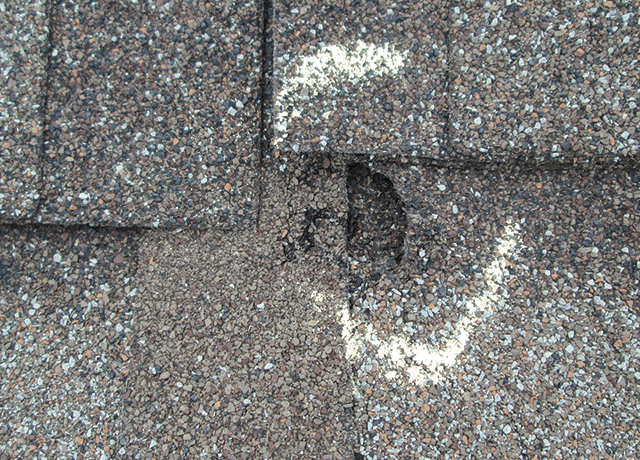
When hailstones strike asphalt shingles, the force of the impact can cause cracks in the surface or bruising beneath it. Bruising occurs when the shingle's underlying fiberglass mat becomes damaged, sometimes leaving a soft spot or indentation. Older shingles are generally more vulnerable because years of weather exposure can make the asphalt less flexible and more likely to crack.
The extent of the damage determines the appropriate repair. This is true of any roofing issue. If only a few shingles are affected, roofers can typically remove and replace them. More widespread cracking or bruising may call for replacing an entire section of roofing. If the material is already nearing the end of its service life, it’s likely a good opportunity to replace them anyway.
Asphalt Shingle Granule Loss
If you look up at your roof and notice patches of shingles that appear darker or smoother than the surrounding areas, you may be seeing granule loss. Asphalt shingles are coated with small mineral granules that protect the underlying asphalt from sunlight and weather exposure. As these granules come loose, they can also collect in gutters or near downspouts.
Some granule loss is normal. However, hailstorms can accelerate this process when repeated impacts knock granules loose. The resulting exposed asphalt is more vulnerable to UV radiation and deterioration. If the loss is concentrated in areas struck by hail, roofers may recommend replacing the affected shingles, rather than allowing the exposed material to continue wearing down.
Roof Leaks and Water Infiltration
Roof leaks, regardless of their cause, should be addressed promptly because of the potential for water to spread beyond the affected area. Moisture that enters the roofing system can eventually reach the attic or interior of the property, where it may damage insulation and ceilings.
Hailstorms can cause leaks by cracking shingles or damaging the seals that otherwise prevent water from entering beneath them. However, a leak may not develop immediately after the storm. Water can find its way through weakened areas during subsequent rainfall if the damage has worsened. There's also the possibility that an existing roofing vulnerability, such as a loose shingle or deteriorated seal, was made worse by the impact of the hail.
Damaged Roof Flashing
Another important part of your roof's defense against moisture is its flashing. These thin pieces of metal are installed around vulnerable areas where roofing materials meet other surfaces.
Flashing is designed to:
- Protect roof penetrations around chimneys, vents, and skylights
- Channel rainwater through roof valleys
- Prevent water from entering roof-to-wall connections
- Protect roof edges from moisture infiltration
Storms can damage flashing in several ways. Large hailstones may dent exposed metal, although dents alone don't necessarily affect its ability to keep water out. Strong winds can loosen flashing or lift surrounding shingles. Indirect damage can also occur when hail strikes nearby roofing materials, loosening the fasteners or breaking the sealant that keeps flashing watertight.
If the material remains securely attached and watertight, however, roofers might not recommend repairs.
Moisture Damage to Roof Decking
Roof decking sits beneath the shingles and underlayment. It's typically made from plywood or oriented strand board (OSB), and because it's covered by several protective layers, you might wonder how a hailstorm could possibly damage it. The concern, however, isn't usually the force of the hail, but again, the moisture that can reach the decking afterward.
For example, suppose a hailstorm cracks several shingles near a roof valley. Rainwater gradually seeps beneath them. The damage might go unnoticed for weeks, especially if the water hasn't reached the home's interior. During that time, repeated exposure to moisture can cause the wooden decking to swell, soften, or eventually rot. If the deterioration becomes extensive, roofers may need to remove the affected shingles and replace sections of decking before installing new roofing materials.
Premature Roof Deterioration and Shingle Failure
A roofing system should provide reliable protection throughout its expected service life, which can span several decades depending on the materials used. Ideally, homeowners shouldn't have to consider replacing their roof long before that period is over if they’ve kept up with routine maintenance and necessary repairs. Some of the more serious problems described above, particularly when combined, can significantly shorten that lifespan.
How many years might be lost, and how much of the roof will ultimately need replacing? That depends on the severity of the damage and how long it's left unaddressed. However, premature replacement is a real possibility that homeowners who tend to postpone their inspections and repairs should take into account.
When Does Hail Damage Require Roof Repair?
Not every mark or dent left behind by a hailstorm requires repair. The deciding factor is whether the damage affects your roof's ability to protect your home or creates conditions that could lead to more serious problems.
Roof repairs are generally recommended when:
- Your roof can no longer keep water out: Damage that compromises the roof's waterproof barrier makes repairs necessary to prevent leaks and interior damage.
- Your roofing materials are deteriorating prematurely: When damage accelerates deterioration and leaves materials vulnerable, repairs help prevent more extensive failures.
- The underlying roof structure is at risk: Moisture reaching the decking or other structural components can cause deterioration that becomes increasingly expensive to address.
- The damage is likely to spread or worsen: Even if the roof is still functioning, compromised materials may become more vulnerable to subsequent storms, potentially turning localized damage into a larger problem.
Roofers also consider the extent of the damage, the roof's overall condition, and its remaining service life when determining the appropriate repairs. Minor cosmetic damage may not require intervention, while widespread deterioration or an aging roof could make replacement more practical than repairing individual areas.
Don't Let Unrepaired Hail Damage Compromise Your Roof
Your roof has been protecting your property reliably all year, and keeping it in good condition is one way to return the favor. If you haven't given much thought to the hail damage it may have sustained earlier, now is a good time to address it with professional hail damage roof repairs from Elite Roofing Pros LLC.
Give your roof the attention it's earned and call (608) 206-9166 today.